Science
Observe & Ask “Why?”
Turn everyday life into experiments and mini-discoveries.
Ages 4–14+
Curiosity
Observation

Where Learning Meets Play
Discover Street • Simple Wins
This is your “what do we do right now?” hub. Activities are content-first by design: quick ideas, age filters, and skill paths. Products are optional—suggested only when a simple add-on (book, puzzle, kit, or game) makes the activity better.
A simple outdoor activity that turns any sidewalk into a science lab.
Pick what you want kids to practice right now. Each path includes fast activities, zero-prep options, and optional “upgrade” ideas.
Turn everyday life into experiments and mini-discoveries.
Easy games that build vocabulary and description skills.
Short puzzles, riddles, and “plan the steps” challenges.
Activities designed for siblings and families to do together.
Low-stimulation activities that help kids settle.
Quick indoor and outdoor movement games.
Most activity failures aren’t about kids—they’re about mismatch. Use this quick check to choose an activity that works right now.
Choose 5, 10, or 20 minutes. Short wins build momentum. If it goes great, repeat or upgrade.
Start: Activity feed
High energy? Choose movement. Low energy? Choose calm focus. If kids are cranky, choose teamwork.
See: Modes
The best activities practice one thing well: observation, storytelling, memory, or problem-solving.
Start: Skill paths
Start with no supplies. Then upgrade with printables, a book, a puzzle, or a kit if the interest sticks.
Try: Printables • Optional: Kits
If kids ask “what are we doing?” more than twice, the activity is too complex. Pick a simpler activity or shorten the steps.
Read the Activities guide →A browsable list designed for speed: what it is, how long it takes, and what skill it builds.
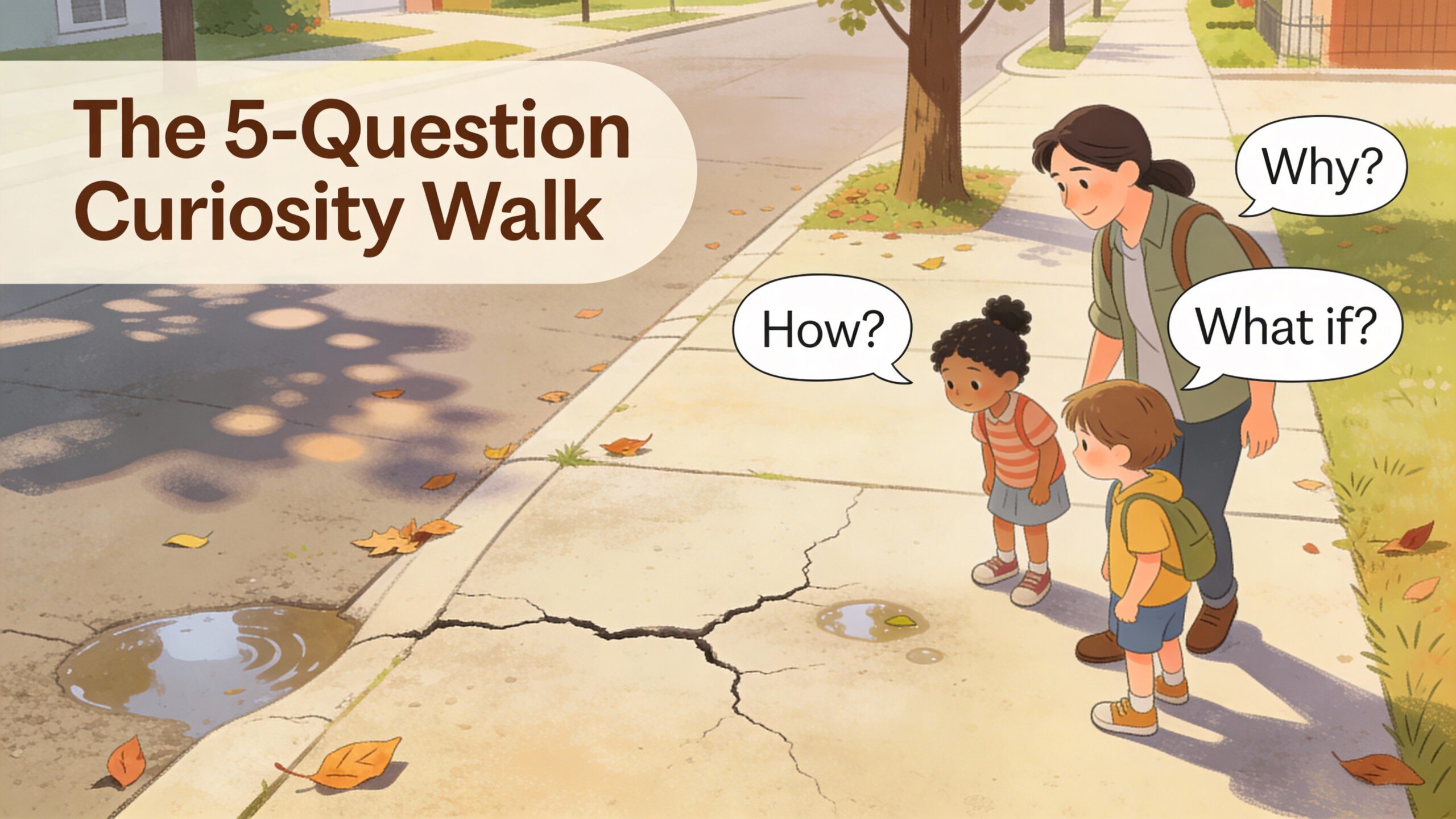
Kids ask (and answer) five simple questions about what they see—then notice patterns.
A cooperative scavenger hunt that builds teamwork and reduces sibling conflict.
Pick a character + place + problem. Kids tell the story in 60 seconds.
Kids draw a line that rises and falls with their breath—simple, calming, effective.
Simple age ranges based on attention span, reading level, and instruction complexity.
Short, simple, and sensory-friendly.
Guided play with quick wins.
More independence and deeper thinking.
More complexity, more creativity.
Pick the mode that matches your environment and energy.
Fast activities for home and classrooms.
Explore →Walks, observation, and nature challenges.
Explore →Instant games and challenges you can print.
Explore →Energy burners and coordination games.
Explore →Reset activities to help kids settle.
Explore →Logic, riddles, and short problem-solving.
Explore →Grab-and-go cards, challenges, and mini games—built to be used, not saved.
Character + place + problem prompts designed for fast storytelling.
Short logic puzzles designed for quick wins and repeat attempts.
A nature-friendly bingo activity that turns walks into discovery.
Simple calm prompts and breathing patterns that kids can choose themselves.
Practical help: picking activities, reducing prep, and keeping kids engaged.
A shortlist of activities that work with almost no setup.
How to pick activities that don’t leave one kid bored or overwhelmed.
A simple setup + activity menu that supports self-regulation.
Observation, curiosity, and science—without worksheets.
Fast answers for choosing activities that work right now.
Keep it short, keep it playful, and let kids choose. The fastest way to ruin an activity is to over-explain or insist on a “right answer.” Choose activities with fast wins and repeatable variations.
Start: Activity feed
Switch to cooperative activities (one shared goal). Reduce competition and choose activities with roles: “finder,” “recorder,” “builder,” and “checker.”
Explore: Family activities
This category leans screen-light by default. When we recommend anything digital, it’s optional and tied to a specific skill.
Explore: Screen-light options