Thinking
Logic & Strategy
Plan ahead, make tradeoffs, and learn from outcomes—without pressure.
Ages 7–14+
Planning
Resilience

Where Learning Meets Play
Discover Street • Play With Purpose
Discover Street games are chosen and designed around one idea: the best learning happens when kids are having fun. This category is a content hub first—simple guidance, skill paths, and play ideas—then (optionally) game picks when you’re ready.
A collaborative game where players solve problems together—no “winner takes all.”
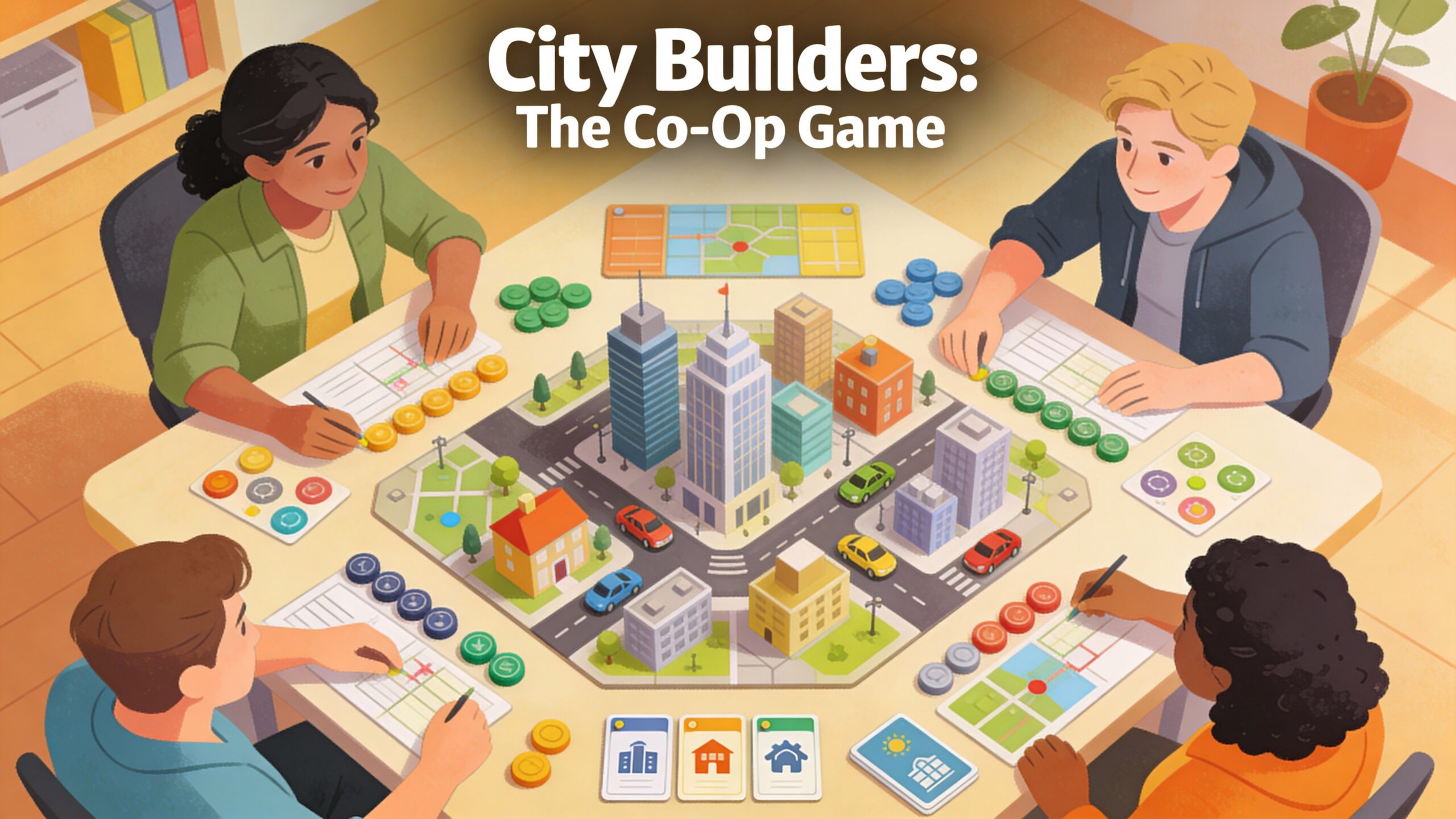
Pick what you want kids to practice. Each path includes quick play ideas, “starter games,” and optional next steps.
Plan ahead, make tradeoffs, and learn from outcomes—without pressure.
Co-op play that builds conversation, empathy, and shared wins.
Vocabulary, descriptions, and “tell me more” storytelling—fast and fun.
Counting, mental math, and pattern spotting disguised as play.
Short, repeatable games that strengthen focus and working memory.
This page is a guide first. If you want to shop, featured game picks are below—but most families start here.
Games create a safe place to try, fail, adjust, and try again. That loop builds confidence—especially for kids who avoid “hard things.”
Explore: Co-op games • Learn: Growth mindset
Even short games train kids to track rules, remember details, and make decisions. Many “memory” games also improve attention span.
Try: Memory picks • Read: Memory explained
Patterns are the hidden engine of reading, math, and science thinking. Great games teach kids to spot patterns quickly—then use them.
Explore: Math games • Print: Printable challenges
Turn-taking, patience, clear communication, and graceful winning/losing are all social skills—games practice them naturally.
Explore: Party picks • Learn: Social skills
If game night melts down, it’s usually mismatch: too long, too many rules, or too competitive. Pick a shorter co-op game or a “best two out of three.”
Read the Game Night guide →These are skill-forward picks. Each includes a quick “how it helps” and optional next steps.
Quick strategy rounds with simple rules and deep decisions—perfect for building planning skills.
Solve problems together: plan, communicate, and celebrate shared wins. Great for siblings and mixed ages.
Fast rounds where kids describe, connect, and build vocabulary—without feeling like spelling practice.
Quick math play built around patterns and combos—kids practice mental math without groaning.
Age is only a starting point. Use these ranges for rules complexity, attention span, and “fun-to-effort” ratio.
Big pieces, short turns, easy rules.
More choices, still fast wins.
Strategy grows quickly here.
More rules, more strategy, longer arcs.
Skill hubs are content-first destinations: intros, quick tips, then game picks.
Different formats create different vibes. Pick what your family enjoys most.
Work together, share wins, reduce stress.
Explore →Plan, adapt, and make choices that matter.
Explore →Vocabulary and storytelling disguised as play.
Explore →Patterns and numbers with fast, replayable rounds.
Explore →Short, repeatable focus and memory builders.
Explore →High laughter, low setup—great for groups.
Explore →Practical answers: what to pick, how to teach rules, and how to keep play fun.
A simple plan: match, setup, shorten, and celebrate small wins.
Less fighting, more teamwork—how to pick the right co-op game.
The “one round demo” method that works for almost any game.
Pick games that make kids describe, connect, and retell—those stick.
Fast answers to help families choose the right games and keep play fun.
The best learning games don’t feel educational. They build real skills—strategy, memory, vocabulary, cooperation—through play. We prioritize “skill practice disguised as fun,” then provide simple guidance so you can choose wisely.
Start: Skill paths
Start with co-op games or games with short rounds. Celebrate effort and strategy rather than only outcomes. If needed, play teams (kids vs. adults) or “beat your best score.”
Guide: Game night without meltdowns
Most kids in this range do best with 10–25 minutes. Short games build positive experiences and keep attention strong. If a game runs longer, split it into two rounds or stop at a natural checkpoint.
See: Games by age
Yes—mini challenges, quick math/word games, and party-style printable cards designed for fast play.
Visit: Free game printables