Engineering
Build & Problem-Solve
Learn by making: test, adjust, and try again.
Ages 7–14+
Iteration
Resilience

Where Learning Meets Play
Discover Street • Make, Build, Explore
Kits are where “I wonder…” becomes “I built it.” This category is a content engine first: guides, skill paths, and simple project ideas. Then—only if you’re ready—curated kit picks and add-ons that match your child’s interests.
Build, test, rebuild—then learn why strong shapes win.
Pick what you want kids to practice. Each path includes beginner projects, a “best first kit,” and optional next steps.
Learn by making: test, adjust, and try again.
Hands-on science that makes “why?” feel exciting.
Simple, guided art that looks impressive—without perfection.
Projects designed for parent + kid collaboration.
Hands-on history that feels like a mini adventure.
Low-mess kits that help kids settle and focus.
Kits go sideways when they’re too hard, too messy, or too “adult.” Use these quick signals to choose a kit that actually gets used.
If setup takes 20 minutes, the kit won’t get repeated. For most families, the best kits start in under 5 minutes.
Start: Kits by age • Try: Low-mess picks
The best kits do one thing well. “Everything kits” often feel confusing and never get finished.
Start: Skill paths
Great kits include enough materials (or refills) to try again. The learning happens on attempt two.
Explore: Refills & add-ons
A kit should end with something kids can show. That “look what I made” moment is the hook for future learning.
Pair: Add a book • Share: Project gallery
If you’re unsure, pick a kit with short “chapters” (steps) and a visible payoff every 5–10 minutes.
Read the “First Kit” guide →These are interest-forward picks with clear “why it works” and gentle next steps.
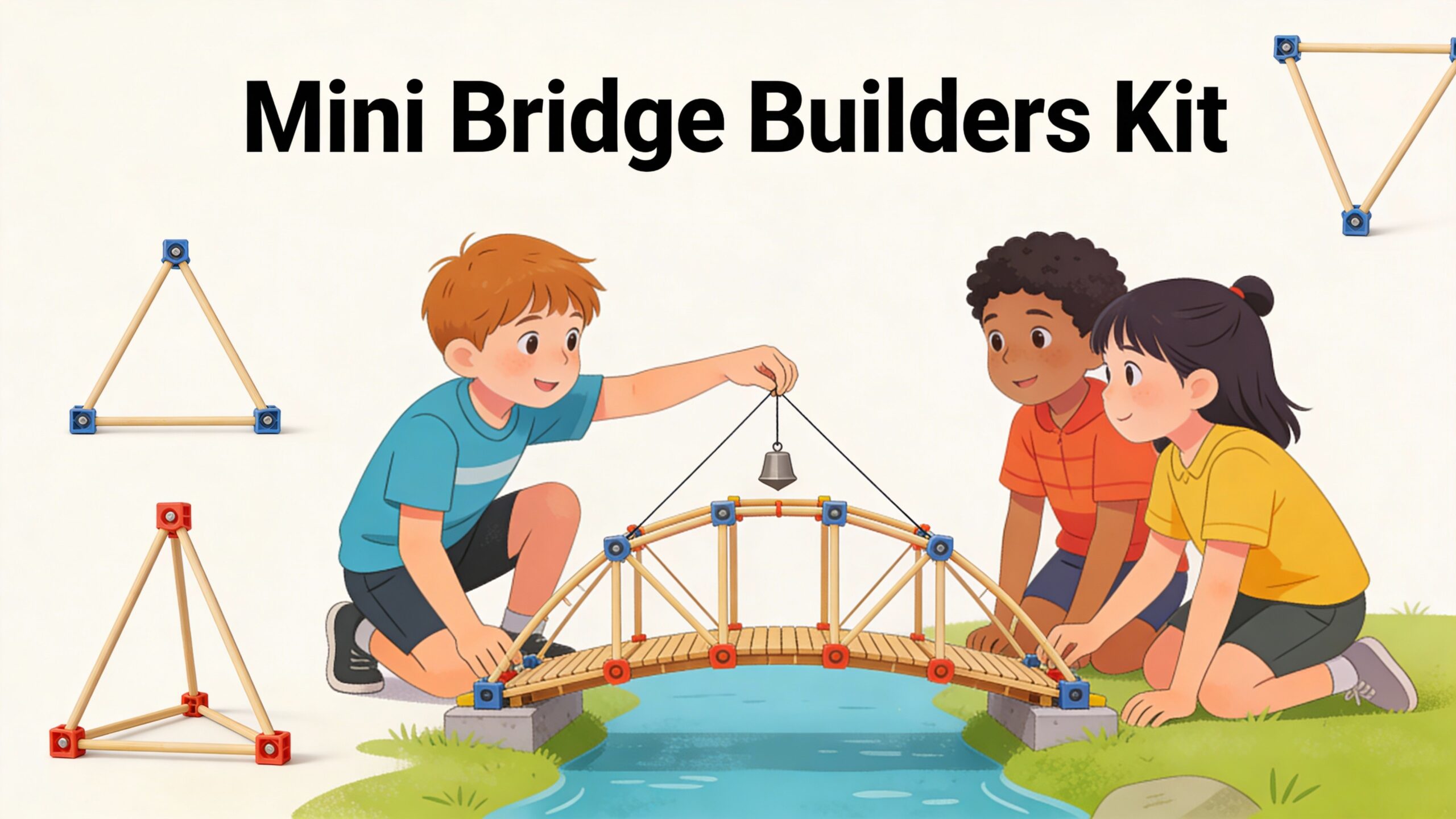
Build a bridge, test strength, and learn why triangles and arches matter—perfect for hands-on problem solving.
A classic science win: observe changes each day, learn about solutions, and end with a display-worthy result.
Guided, low-pressure art with strong results. Great for kids who want something that looks “cool” fast.
A hands-on “excavation” experience that turns dinosaurs into a story kids can touch.
Use these ranges for instructions, dexterity, and attention span—then choose by interest.
Big pieces, fast wins, minimal reading required.
Guided projects with clear steps and visible progress.
More independence and deeper skills.
Longer projects, more complexity, more creativity.
Interest hubs are content-first: intros, beginner projects, then kit picks.
Different kits serve different moods. Pick what fits your home right now.
Build, test, learn the “why.”
Explore →Create something kids are proud of.
Explore →Structures, machines, and problem solving.
Explore →History and science “unboxing” adventures.
Explore →Low stress, repetitive, soothing builds.
Explore →Projects designed to do together.
Explore →Practical answers: what to buy, how to reduce mess, and how to make kits repeatable.
Fast wins, low frustration, and projects kids actually finish.
How to predict mess level before you buy—and what to avoid.
What makes a STEM kit exciting—and which features matter most.
A simple approach for mixed ages and different attention spans.
Fast answers to help families choose kits that actually get used.
A good kit has clear steps, fast setup, visible progress every 5–10 minutes, and a finished result kids can show. Bonus points for refills or enough supplies to try again.
Start: Featured kits
Mess usually comes from liquids, powders, and open paint/adhesives. Look for kits that include trays, measured packets, and clear cleanup steps—or choose low-mess categories.
Guide: Low-mess kits
That’s usually mismatch: too many steps, too long, or not enough visible progress. Choose shorter kits or break the project into “chapters.” Celebrate the partial win and stop at a natural checkpoint.
Start: Kits by age